
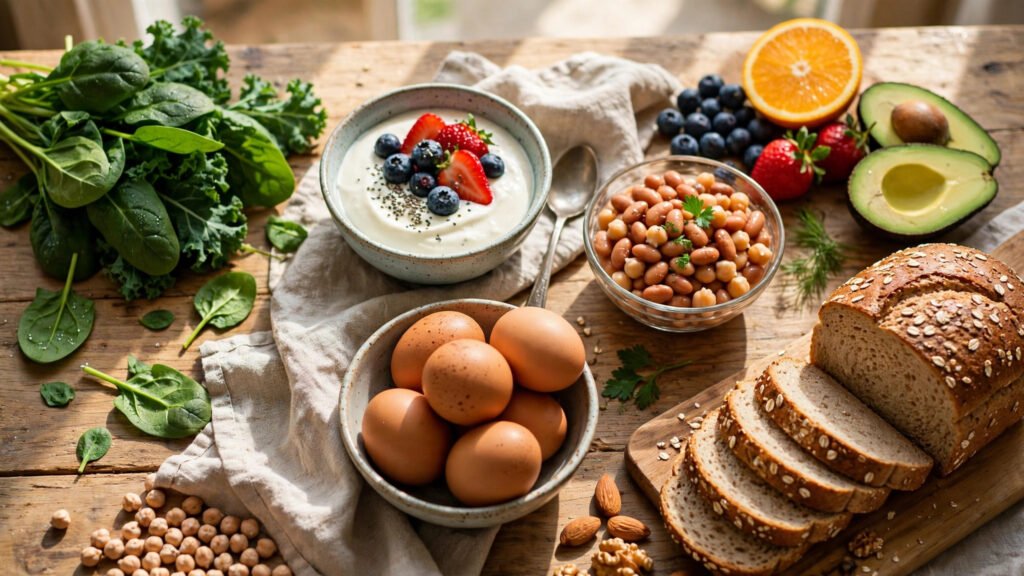
Eating in pregnancy can feel oddly pressurised. Every meal suddenly seems to carry a message, and advice arrives from every direction at once. The reassuring truth is that a healthy pregnancy diet looks a lot like a healthy diet at any other time, with a few nutrients deserving extra attention and a few foods best left off the menu. This trimester-by-trimester guide focuses on the positive side: the pregnancy foods to eat, and simple ways to fit them into real life. It is general information, not medical advice, so please check personal questions with your doctor or midwife.
The Building Blocks That Matter All Pregnancy Long
Before breaking things down by trimester, it helps to know the handful of nutrients that come up again and again. You do not need to track them like an exam. Simply eating regularly from these food groups covers most of them naturally.
- Folate: important in the earliest weeks for the baby’s developing spine and brain. Found in leafy green vegetables, beans, lentils, peas, fortified cereals and citrus fruit.
- Iron: supports your increased blood volume and the baby’s growth. Found in red meat, poultry, fish, beans, lentils, spinach and fortified grains, and absorbed better when eaten with vitamin C foods such as peppers, tomatoes or fruit.
- Calcium: builds the baby’s bones and teeth. Found in milk, yoghurt, cheese, calcium-set tofu, fortified plant drinks and tinned fish eaten with their soft bones.
- Protein: the raw material for new tissue, needed throughout. Found in eggs, meat, fish, dairy, beans, lentils, nuts and soya foods.
- Omega-3 fats: contribute to the baby’s brain and eye development. Oily fish such as salmon and sardines are the best-known source.
- Fibre and fluids: pregnancy digestion slows down, and fibre from wholegrains, vegetables, fruit and pulses, together with regular drinks of water, helps keep things moving comfortably.
Most antenatal guidance also discusses supplements, particularly folic acid in early pregnancy and vitamin D. Our separate prenatal vitamins guide explains the usual reasoning, but your own provider’s advice comes first, because doses and needs vary.
First Trimester: Eating Through the Queasy Weeks
For many women, the first trimester is less about an ideal menu and more about keeping anything down. Nausea often peaks in these weeks, appetites swing wildly, and foods you loved last month may suddenly be impossible. This is normal, and the baby is tiny at this stage, drawing on your body’s stores while you do your best.
Strategies that help many women include eating little and often rather than facing three large meals, keeping plain snacks such as crackers or dry toast by the bed for the early-morning wave, and choosing cold foods, which tend to smell less strong than hot ones. Ginger, in tea, biscuits or cooking, is a traditional remedy many find soothing. Cold yoghurt, fruit, smoothies, simple soups and buttered toast are common survivors of the queasy weeks.
Where you can manage them, folate-rich foods deserve a place in this trimester, because the baby’s spinal cord forms very early: a bowl of lentil soup, eggs with spinach, beans on wholegrain toast, or a fortified breakfast cereal all help. If whole categories of food are off the table for a few weeks, do not panic. Appetite usually returns as the first trimester week by week gives way to the second, and a varied diet then easily makes up the ground.
Second Trimester: The Appetite Returns
The second trimester is often called the comfortable middle, and food is a big part of that. Nausea fades for most women, energy improves, and eating becomes a pleasure again. This is a good stretch for building steady habits: regular meals, plenty of vegetables, and enough protein and calcium for a baby who is now growing quickly.
A practical day might look like porridge or eggs at breakfast, a lunch built around a sandwich, salad or soup with a protein in it, fruit and yoghurt as a snack, and an evening meal that pairs a protein with two or three vegetables and a wholegrain base such as rice, pasta or potatoes. You do not need to eat for two in any literal sense. For most of pregnancy, the extra energy needed is modest, roughly like an additional snack rather than a second dinner, and it matters more later than it does now.
Iron deserves attention in this trimester, because blood volume has expanded a lot and iron stores can dip, leaving you tired and pale. Try pairing iron sources with vitamin C in the same meal: spinach with a squeeze of lemon, beans with tomatoes, or meat with peppers. Tea and coffee with a meal can reduce iron absorption a little, so having them between meals is a small, easy adjustment. If tiredness is heavy or you feel breathless, mention it at an appointment, since iron levels can be checked with a blood test rather than guessed. Steady, gradual weight gain across this trimester is the usual pattern providers like to see.
Third Trimester: Big Baby, Smaller Stomach Space
In the third trimester the challenge changes. The baby is large, your stomach has less room, and heartburn is a common companion, yet this is also when the baby is gaining the most weight and laying down iron and calcium stores. The answer for most women is a return to the first trimester pattern, for opposite reasons: smaller meals, eaten more often, with nutrient-dense foods chosen so that limited space is well spent.
Protein and calcium are worth prioritising. Yoghurt, cheese, eggs, fish, chicken, beans and lentils all deliver a lot in a small portion. Oily fish once or twice a week, within the limits your local guidance sets, supports the baby’s brain development in these final months. Fibre and fluids matter more than ever, because constipation is common now; prunes, kiwi fruit, wholegrain cereals, vegetables and regular glasses of water are simple, effective tools.
For heartburn, many women find it helps to eat earlier in the evening, avoid lying flat soon after meals, and notice their personal triggers, which often include very spicy, fatty or acidic foods. Sleeping slightly propped up can make nights easier, and our tips on sleeping comfortably during pregnancy cover the pillow arrangements that help. Persistent or severe symptoms are worth raising at a check-up rather than simply enduring.
Snacks That Actually Help
Good snacks do quiet, useful work in pregnancy: they steady energy, fill nutrient gaps and fend off the nausea that an empty stomach invites. Keep a small stock of options you genuinely like:
- A small handful of nuts and dried fruit
- Yoghurt with berries, or a smoothie made with milk or fortified alternatives
- Cheese with apple slices or wholegrain crackers
- Hummus with vegetable sticks or pitta
- A boiled egg, or eggs any way you enjoy them
- Oatcakes, a banana, or a small bowl of fortified cereal
- Edamame beans, roasted chickpeas, or a glass of milk before bed
Keep a snack in your bag as well. Appointments run late, trains stop, and hunger in pregnancy can arrive suddenly and forcefully. A cereal bar in the glovebox has saved many afternoons.
Drinks: What Helps and What to Watch
Water is the default drink of pregnancy, and most women need a little more fluid than usual, especially in warm weather or when active. Milk and fortified alternatives add calcium. Fruit juice counts, but it is sugary, so a small glass with a meal is a sensible pattern rather than sipping it all day.
Caffeine is best kept modest; many guidelines suggest limiting it rather than cutting it out entirely, and it hides in tea, coffee, cola, energy drinks and chocolate, so the total can creep up. Alcohol is the clear exception to moderation advice: the standard guidance is to avoid it in pregnancy altogether. Herbal teas vary in their ingredients, so check with your provider if there is one you drink daily. On the food side, our companion guide to foods to avoid during pregnancy covers the items, such as certain soft cheeses and undercooked meats, that are best skipped until after the birth.
Managing Cravings, Aversions and Odd Days
Cravings are a famous part of pregnancy and, within reason, a harmless one. Wanting pickles, ice, citrus or a particular childhood meal is common, and enjoying them is fine as part of an overall varied diet. Aversions are equally common, especially to coffee, strong smells and foods you ate just before a wave of nausea.
One pattern does deserve a mention: craving non-food items such as ice in large amounts, chalk, soil or laundry starch, known as pica. Tell your provider if this happens, because it can occasionally be linked with low iron. And give yourself grace on the odd days. A day of plain toast and tea because that is all you can face does not undo months of good eating. Babies are resilient, and overall patterns matter far more than any single day.
A Simple Weekly Rhythm to Aim For
If planning helps you, think in weeks rather than perfect days:
- Oily fish on one or two days, and other fish or seafood as you enjoy it
- Beans, lentils or chickpeas in several meals across the week
- Leafy greens most days, even a small handful in a sandwich or soup
- Dairy or fortified alternatives daily, for calcium
- Eggs a few times a week, fully cooked
- A rainbow of fruit and vegetables, choosing different colours across the week
- Wholegrain versions of bread, rice and pasta most of the time
Batch cooking helps too. A pot of soup, a tray of roasted vegetables or a bean chilli made once can carry several lunches, which is a kindness to your future tired self, especially in the final weeks.
Conclusion
Eating well in pregnancy is mostly about pattern, not perfection: folate-rich foods early, iron and calcium through the growing middle months, and smaller, protein-rich meals when space runs short at the end. Eat regularly, drink water, enjoy your food where you can, and let the avoid-list be short and specific rather than a source of dread. The rest is ordinary good sense, and you were probably doing most of it already.
Pingback: Foods to Avoid During Pregnancy: A Clear, Calm Guide – bum
Pingback: Prenatal Vitamins Explained: Folic Acid, Iron and What Matters Most – bum