
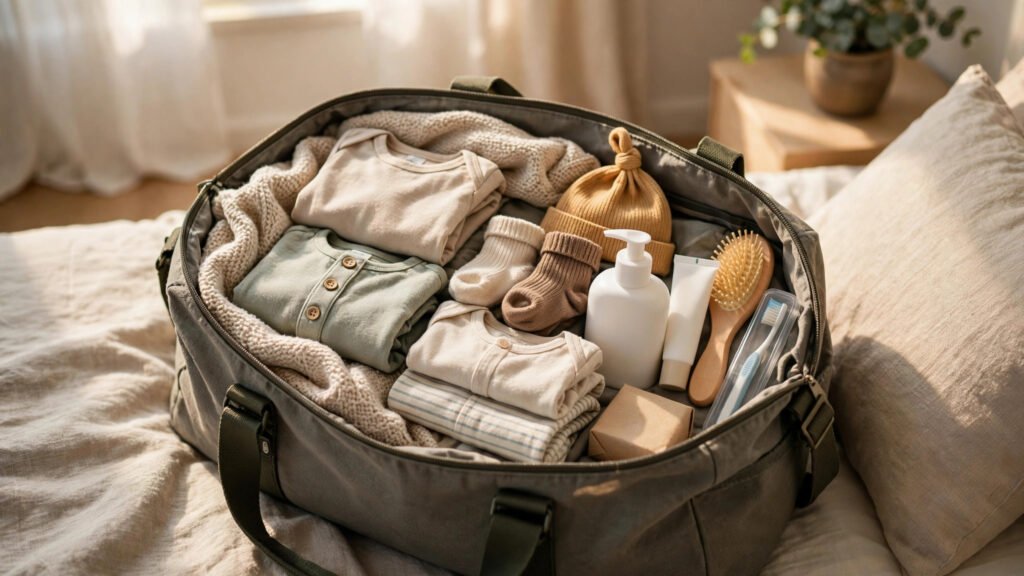
Few small jobs bring as much calm as a packed hospital bag waiting by the door. When labour starts, whether that is at 3 p.m. or 3 a.m., you do not want to be hunting for phone chargers and baby clothes while timing contractions. A good hospital bag checklist is not about packing everything you might conceivably want. It is about having the essentials for you, your baby and your partner ready in one place, packed at a sensible time, so the start of labour feels organised rather than rushed.
This guide goes through the bag section by section: what you will genuinely use during labour and on the postnatal ward, what your baby needs for the first days and the trip home, what your partner should bring for themselves, and what is better left at home. If you have not yet thought through your preferences for the birth itself, our guide on how to write a birth plan pairs naturally with this list, and a printed copy of that plan belongs in the bag.
When to Pack Your Bag
Most people aim to have the bag packed by around week 36, and earlier if there is any chance of an early arrival, such as a multiple pregnancy or advice from your care team to be ready sooner. Packing a little early costs nothing and removes one worry from the final weeks. Keep the bag somewhere obvious, by the front door or in the car if you will drive to hospital, and tell your partner where it is. A small number of last-minute items, such as your toothbrush and phone charger, can go on a short note stuck to the top of the bag so nothing essential is forgotten in the moment.
It also helps to think of the bag as two bags in one. A smaller bag for labour itself, holding what you need in the delivery room, and the main bag with everything for afterwards, which can stay in the car until you are settled on the ward. This keeps the delivery room uncluttered and means your partner is not dragging a suitcase around during labour.
For You: During Labour
- Your maternity notes and birth plan. Your care team will want your notes, and a printed birth plan makes your preferences clear even if the staff change shifts.
- Something comfortable to labour in. An old nightdress, a large soft t-shirt or a birthing gown you do not mind getting messy. Many women change into a hospital gown, but having your own option is comforting.
- A dressing gown and slippers or slip-on shoes. For walking the corridors during early labour and trips to the bathroom. Choose footwear that is easy to get on without bending.
- Socks. Feet often get cold during labour, even in a warm room.
- Hair tie or headband. A small thing that makes a real difference when you are hot and working hard.
- Lip balm. Breathing through labour, and hospital air, dry lips out quickly. This appears on almost every experienced mother’s list.
- Drinks and snacks. A water bottle with a straw is easier to drink from in any position. Light snacks for energy, subject to your hospital’s guidance, and fuller snacks for your partner.
- Entertainment and comfort items. Music, a playlist, headphones, a book or downloaded programmes for a long early labour, plus anything that helps you relax, such as a familiar pillow with a coloured pillowcase so it is not mixed up with hospital linen.
- Phone and a long charging cable. Hospital plugs are rarely where you want them. A long cable or a power bank is genuinely useful, for labour updates and for the first photos.
For You: After the Birth
The hours and days after birth have their own needs, and this is where thoughtful packing pays off most. You will be sore, tired, possibly feeding around the clock, and photographed more than you expect.
- Nightwear that opens at the front. Two sets, so you have a spare. Front-opening pyjamas or nightdresses make feeding and skin-to-skin contact easy, and dark colours are forgiving.
- Nursing bras and breast pads. One or two soft, non-wired nursing bras, and pads for leaks as your milk comes in.
- Plenty of large, comfortable pants. High-waisted, soft and inexpensive enough that you do not mind disposing of them. You will also want maternity pads, which are thicker than ordinary sanitary pads; pack a full pack, as hospitals vary in what they supply.
- A comfortable going-home outfit. Think soft waistband and roomy fit. You will still look and feel several months pregnant at first, so pack a maternity outfit rather than pre-pregnancy clothes. Many women simply wear what they arrived in, freshly laundered, or a loose dress.
- Toiletries. Toothbrush and toothpaste, hairbrush, deodorant, face wipes, gentle shower gel, shampoo, moisturiser and any make-up that helps you feel like yourself in photos. A first shower after birth feels wonderful, and your own products make it better.
- Towels. Hospital towels can be small and thin. If you have room, your own towel, in a colour that stands out, is a real comfort.
- Feeding support. Nipple cream if you plan to breastfeed, and a feeding pillow if you use one and have space, though ward pillows usually do the job.
- Small comforts. Earplugs and an eye mask for a busy, lit postnatal ward, your own pillow, and snacks for the night feeds. Postnatal wards are not restful places, and anything that protects your sleep helps.
Knowing the signs of labour helps you judge when the bag moves from the hallway to the car, and what you pack for afterwards shapes the start of the first week with a newborn more than most people expect.
For Your Baby
Newborns need surprisingly little in hospital, and most hospitals provide nappies and blankets while you are there, though policies vary. Pack for warmth, the first outfits, and the journey home.
- Vests and sleepsuits. Three or four of each in newborn size, plus one set in a smaller or larger size if you have them, because babies arrive at unpredictable sizes. Front-fastening styles make changes easier when you are learning.
- A hat and a cardigan. Newborns lose heat quickly. A soft hat for the first hours and a cardigan for the trip home cover most needs.
- Nappies and cotton wool or wipes. A small pack of newborn nappies, and whatever your hospital recommends for cleaning delicate skin in the first days.
- Muslin cloths. Two or three. They serve as light blankets, feeding covers, mopping cloths and changing mat covers in the first week alone.
- A blanket for the journey home. Suitable for the season, and used in the car seat over the straps as advised, never as thick padding under them.
- The car seat. Not in the bag, obviously, but fitted in the car in advance and practised with. Most hospitals will not discharge a baby travelling by car without one, and fitting it for the first time in the car park with a newborn waiting is stress nobody needs.
If you are still gathering baby items, the essentials here overlap with our baby registry checklist, which separates what a newborn truly needs from what can wait.
For Your Partner or Birth Supporter
Partners are often forgotten in the packing, and then spend a long labour hungry, thirsty and in the same clothes for a day and a half. A small separate bag solves it.
- Snacks and drinks. Enough for a long stretch. Cafes close at night, and your partner leaving to find food during labour helps nobody.
- A change of clothes and basic toiletries. A fresh t-shirt, toothbrush and deodorant make an overnight stay on a chair far more bearable.
- Phone charger and something to do. Early labour can be slow, and a calm, occupied partner is a better support.
- Coins or card for parking and machines. Small practicalities that cause real stress when forgotten.
- A list of who to contact. Names and numbers for the announcements after the birth, agreed in advance, so no one important is missed and no one is told before you are ready.
Documents, Money and Small Practicalities
Beyond clothes and toiletries, a few small items prevent outsized stress. Keep your identification and any insurance or hospital paperwork with your maternity notes, according to your hospital’s system. Have a payment card and a little cash for parking, vending machines and the pharmacy run your partner may make on day two. If you wear glasses, pack them and a spare pair if you have one; contact lenses and long labours are a poor mix. A pen is worth more than it sounds, for forms, feeding notes and the endless small lists of the first days. Finally, agree in advance who brings the bag in, who takes home the first load of laundry, and where the bag goes if you transfer wards, so nothing important wanders off in the shuffle.
What to Leave at Home
Overpacking has its own costs: a cluttered room, more to lose, and exhausted rummaging. Leave valuables and jewellery at home. Skip large quantities of nappies and pads beyond the first supply; you can restock easily. Do not pack lots of outfits for yourself or the baby; a few comfortable sets beat a fashion selection. Bottles and formula are usually unnecessary to bring unless your hospital advises it or you have a specific feeding plan to discuss with your team; if you plan to formula feed, check what the hospital provides. Finally, leave the huge suitcase itself at home. Two modest bags are easier to carry, store and find things in.
A Final Check Before the Day
- Bag packed by around week 36 and kept by the door or in the car.
- Maternity notes and birth plan in the top of the labour bag.
- Car seat fitted and practised at least once.
- Partner’s bag packed separately, with snacks and a change of clothes.
- Short note on top listing last-minute items: toothbrush, chargers, glasses if you wear them.
- Bag rechecked if the season changes between packing and the due date.
Conclusion
A hospital bag does not need to be perfect; it needs to be ready. Pack for labour with comfort and your notes at the centre, for the ward with nightwear, underwear, pads and toiletries that make you feel human, for your baby with a few soft outfits and a blanket, and for your partner with food and a change of clothes. Fit the car seat early, leave the valuables and excess at home, and put the bag where you can grab it without thinking. When the moment comes, you will be glad the thinking was already done.
Pingback: Signs of Labour: Telling Real Contractions From Practice Ones – bum
Pingback: Baby Registry Checklist: Essentials, Nice-to-Haves and What to Skip – bum