
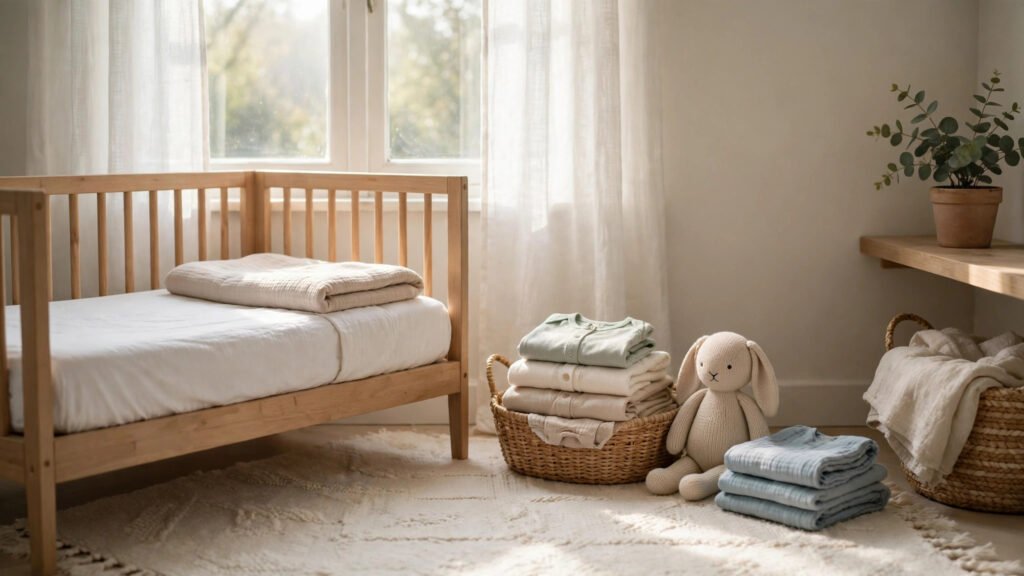
Preparing your home for a newborn sounds like a huge project, but the honest truth is that a new baby needs very little: somewhere safe to sleep, somewhere to be fed and changed, and adults who can find things one-handed at three in the morning. Everything else is comfort, not necessity. The trick is to prepare room by room, in the weeks before your due date, so the work feels like a series of small, satisfying jobs rather than one giant renovation. This checklist walks through each space in turn, focusing on what genuinely helps in the first weeks.
Aim to have the basics done by around week 36 or 37. Babies mostly arrive around their due date, but having the essentials ready a few weeks early removes a whole category of stress, and you can spend the final stretch resting instead. If you are still deciding what to buy, work alongside a nursery essentials checklist so purchases and preparation stay in step.
Start With the Big Clean and Declutter
Before you set up a single baby item, give the home a proper clear-out. Newborns bring a surprising amount of small equipment, laundry and visitors, and clear surfaces make all of it easier to manage. Go room by room with three bags: one for donations, one for recycling and rubbish, and one for things that belong elsewhere. You are not aiming for show-home perfection. You are making space in cupboards for nappies, clearing the floors you will pace at night, and finding homes for the items that usually live on the stairs.
Then do a practical deep clean of the rooms the baby will spend time in: floors washed, bathroom scrubbed, kitchen surfaces cleared. If friends or family offer help before the birth, this is the job to hand them. It is far easier before the baby arrives than in the fog of the first fortnight.
The Sleeping Space: Cot, Bassinet and Your Bedroom
For the first months, most babies sleep in their parents’ room, in a cot, crib or bassinet beside the bed. Set this up early and check it carefully. The sleep surface should be firm and flat, with a fitted sheet and nothing else in the space: no pillows, loose blankets, bumpers or soft toys. Check second-hand cots for firmness of the mattress, working sides and no peeling paint, and confirm the mattress fits snugly with no gaps at the edges.
Sleep space checklist
- Firm, flat mattress that fits the cot or bassinet with no gaps
- Fitted sheets, at least two or three for the inevitable night-time changes
- Sleep bags or swaddles appropriate for the season, if you plan to use them
- A night light warm and dim enough for feeds without fully waking everyone
- Room thermometer if your home runs very warm or cold
- Blackout blind or curtains if early mornings flood the room with light
Place the cot away from windows, radiators and any cords from blinds or curtains. If the nursery will be used later rather than now, it only needs the basics at this stage; the full room can evolve as the baby grows. Parents setting up in the final trimester often pair this job with packing, using a hospital bag checklist in the same weekend so both big tasks are done together.
The Changing Station: One Good Spot Beats Three Improvised Ones
You will change thousands of nappies, so one well-organised changing spot is worth setting up properly. It can be a changing table, a changing mat on top of a chest of drawers, or a mat on the floor; the surface matters less than the stocking. Everything should be reachable without taking a hand off the baby: nappies in two sizes, wipes or cotton wool and water, barrier cream, a small stack of muslins, spare clothes for the baby and a lidded bin or nappy bags within arm’s reach.
Stock a portable caddy as well, with the same essentials in miniature. You will change the baby wherever you happen to be, and a caddy that travels from bedroom to living room saves endless trips. Restock both stations weekly; running out of wipes mid-change is a rite of passage best experienced once.
The Kitchen: Feeding and Sterilising Space
Clear one section of worktop and one cupboard for feeding equipment, whether you plan to breastfeed, bottle-feed or combine the two. Bottles, a steriliser or a large clean bowl for sterilising fluid, a bottle brush and a drying rack all need a home that is not the middle of your cooking space. If you will express milk, add storage bags or pots and make a labelled space in the freezer.
Kitchen preparation list
- One cleared cupboard or shelf for bottles and feeding gear
- Sterilising method chosen, bought and tried once before the birth
- Kettle descaled and easy to reach
- A basket of easy one-handed snacks and a large water bottle for the feeding parent
- Freezer meals: batch-cook a few favourites in the final weeks if you can
That last item is not baby equipment at all, and it may be the most valuable thing on this page. In the first two weeks, a freezer containing a week of dinners is worth more than most gadgets. If cooking is not realistic, accept every offer of food from family and suggest they drop it at the door.
The Living Room: Your Daytime Base
You will likely spend most of the day in the living room, so prepare it as your daytime base. Set up a comfortable feeding chair or sofa corner with cushions for support, a small side table for water, snacks, phone and remote, and a safe flat spot to lay the baby down, such as a play mat or Moses basket. A couple of muslins and a spare top for you, kept in a basket beside the chair, will save constant trips upstairs.
Think about lighting and warmth too. A lamp you can switch on without standing up, and a blanket for you during long evening feeds, make the room work through the night as well as the day. While you arrange this room, it is also the moment to move cleaning products, medications and small choking hazards up out of the reach of any visiting toddlers, even though your own baby will not be mobile for months.
The Bathroom: Bath Time Basics
Baby baths can happen in a baby bath, a clean sink or the family bath with very shallow water. Choose your spot and gather the kit nearby: a soft towel or two, cotton wool, a mild baby wash if you plan to use one (plain water is fine for the first weeks), and a fresh nappy and clothes laid out ready, because a wet, cold baby wants dressing to be fast. Check your water temperature habits now; bath water for a baby should feel warm, not hot, and running the cold tap first and mixing well is a good routine to build.
While you are in the bathroom, assemble a small postnatal kit for the mother: maternity pads, comfortable underwear, a jug for pouring warm water while using the toilet if stitches are sore, and whatever pain relief your healthcare team has suggested you keep at home. Having it ready in a basket by the toilet is a kindness to your future self.
Safety Checks for the Whole Home
Newborns do not move, but preparing early means you will not be doing safety jobs while sleep-deprived. Walk the house with fresh eyes and deal with the short list that matters now:
- Test smoke alarms and carbon monoxide detectors, and replace batteries
- Secure blind and curtain cords up high, well out of any future reach
- Check the water heater setting so tap water cannot scald
- Move medicines, vitamins and cleaning products to a high or locked cupboard
- Fix wobbly furniture and trailing cables along the routes you will walk at night
- Know where your stopcock, fuse box and torch are, and tell your partner too
Full baby-proofing, such as stair gates and socket covers, can wait until your baby is approaching crawling age. Doing the short list above now covers the risks that actually apply to a newborn household.
Laundry, Stock and the Admin Corner
Babies generate laundry at a rate that surprises everyone. Before the birth, wash the baby’s first clothes, sheets and towels with a gentle detergent and put them away by size, so the tiny first outfits are at the front. Set up a simple system: a laundry basket that lives where the baby is changed, and a stock shelf for nappies, wipes and toiletries so you can see at a glance when supplies run low.
Finally, create one small admin corner: a folder or box for hospital notes, appointment letters and the paperwork that arrives with a baby. Add a notepad for the questions that occur to you at odd hours, ready for midwife and health visitor appointments. If you are also choosing gifts people keep asking about, point them to your baby registry checklist rather than receiving five of the same thing.
Pets, Visitors and the Hallway
Two small areas are easy to forget. If you have pets, set up their feeding and sleeping arrangements so they do not have to change the day the baby comes home, and let them get used to new furniture and baby sounds gradually where you can. For visitors, decide in advance how you want the first days to work and tell family plainly; a note near the door asking guests to wash their hands is easier than making the request twenty times. Finally, clear the hallway: pram parking, a hook for the changing bag and space for the car seat by the door will make every trip in and out calmer from the very first one.
Conclusion
Preparing your home is really about the adults: clear surfaces, stocked stations and a freezer with food in it will carry you through the first weeks far better than any impressive nursery. Work room by room, finish the sleep space, changing station and kitchen first, and let the rest follow. Then, when the day comes and you are in your first week with a newborn, you can spend your energy on the baby instead of hunting for wipes. A home that is ready enough beats a home that is perfect, every time.